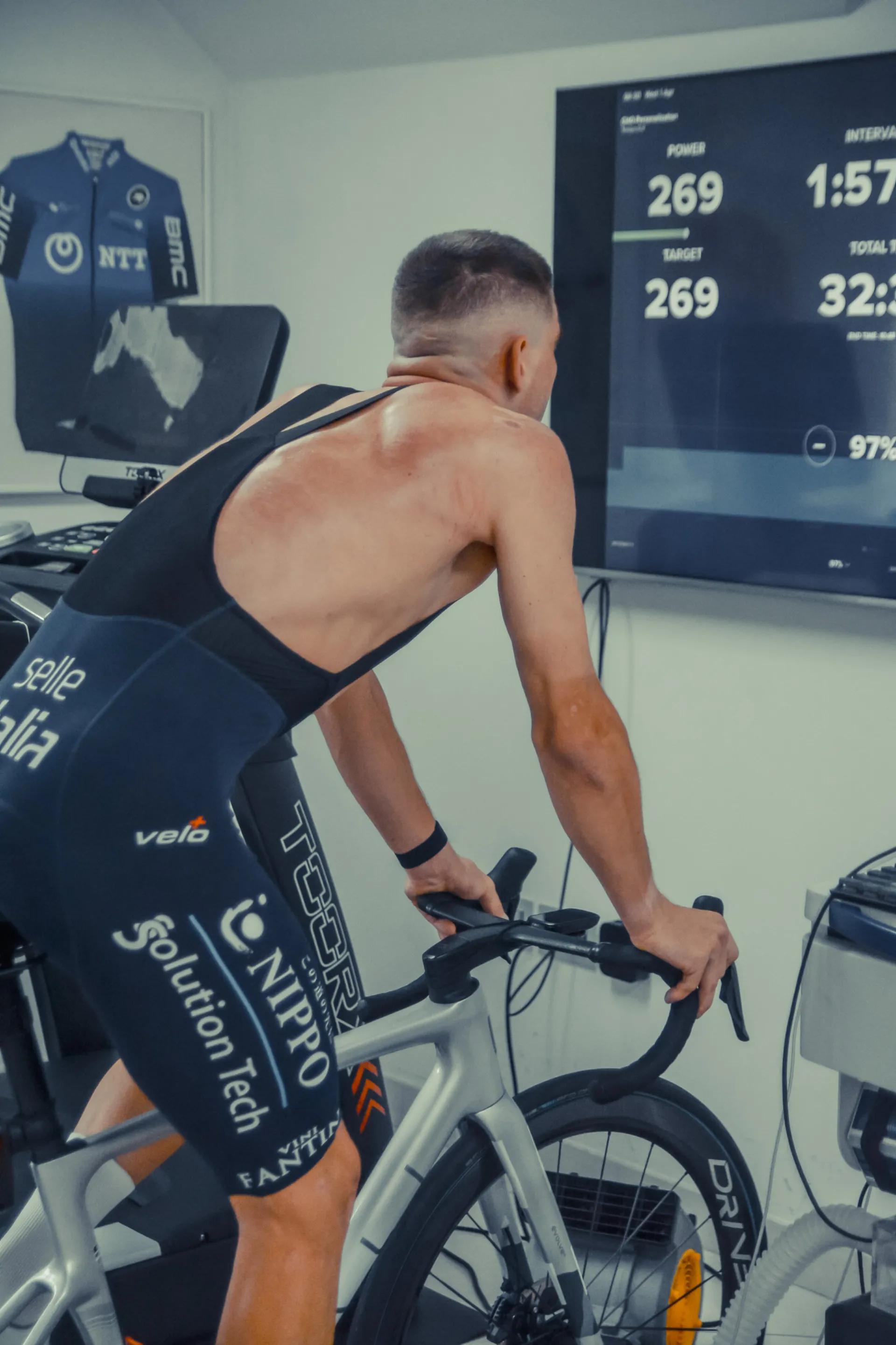
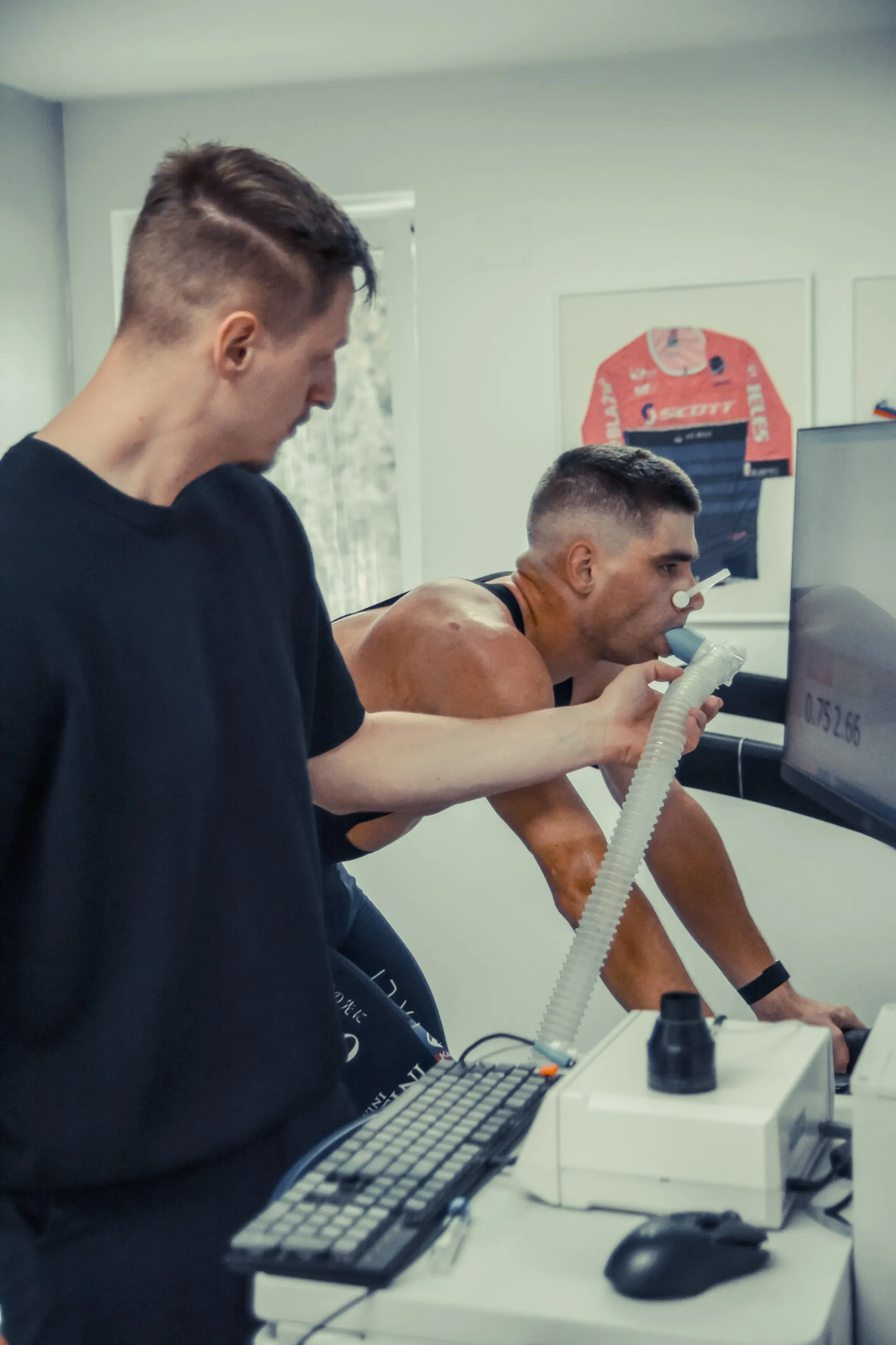
Athlete with metabolic mask during CHO test at HPC laboratory
New Service

Personalisation of Carbohydrate Intake

Using ¹³C isotopic tracers, we measure exactly how much of the carbohydrates you consume your body actually absorbs and oxidises during exercise. We are one of the few laboratories in Europe that actually measures this.

Why This Test?

Generic advice doesn't work for everyone.

You've probably heard it: "Take 60–90 g of carbs per hour." But that range is enormous — and the right answer is different for every individual.

Two athletes with similar body mass, similar power output, and similar training status can have completely different exogenous carbohydrate oxidation rates. One oxidises 47 g/hour of glucose, the other 78 g/hour. This means the optimal recommendation for one is around 80–85 g/hour, while for the other it's 140–145 g/hour. Without measurement, there is simply no way to know.

Athlete A
Mass 75 kg
CP 315 W
VO₂max 62 ml/kg/min
Glucose oxidation
47 g/hour
Recommended intake (glucose + fructose)
80–85 g/hour
VS
Athlete B
Mass 74 kg
CP 310 W
VO₂max 61 ml/kg/min
Glucose oxidation
78 g/hour
Recommended intake (glucose + fructose)
140–145 g/hour

Similar athletes, completely different intake. The difference in recommended carbohydrate intake is nearly double — 80 g/hour versus 140 g/hour. Without measurement, there is no way to know.
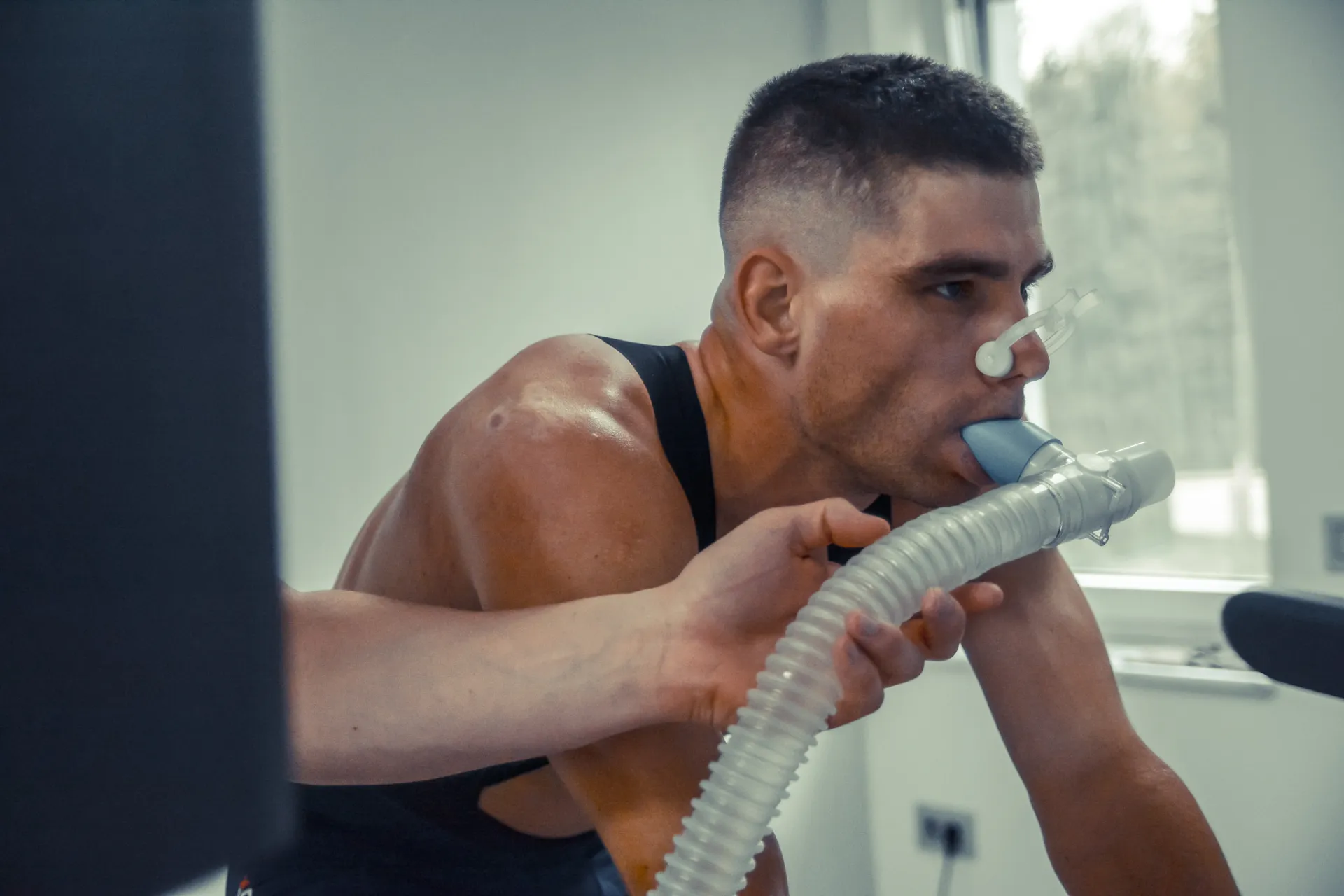
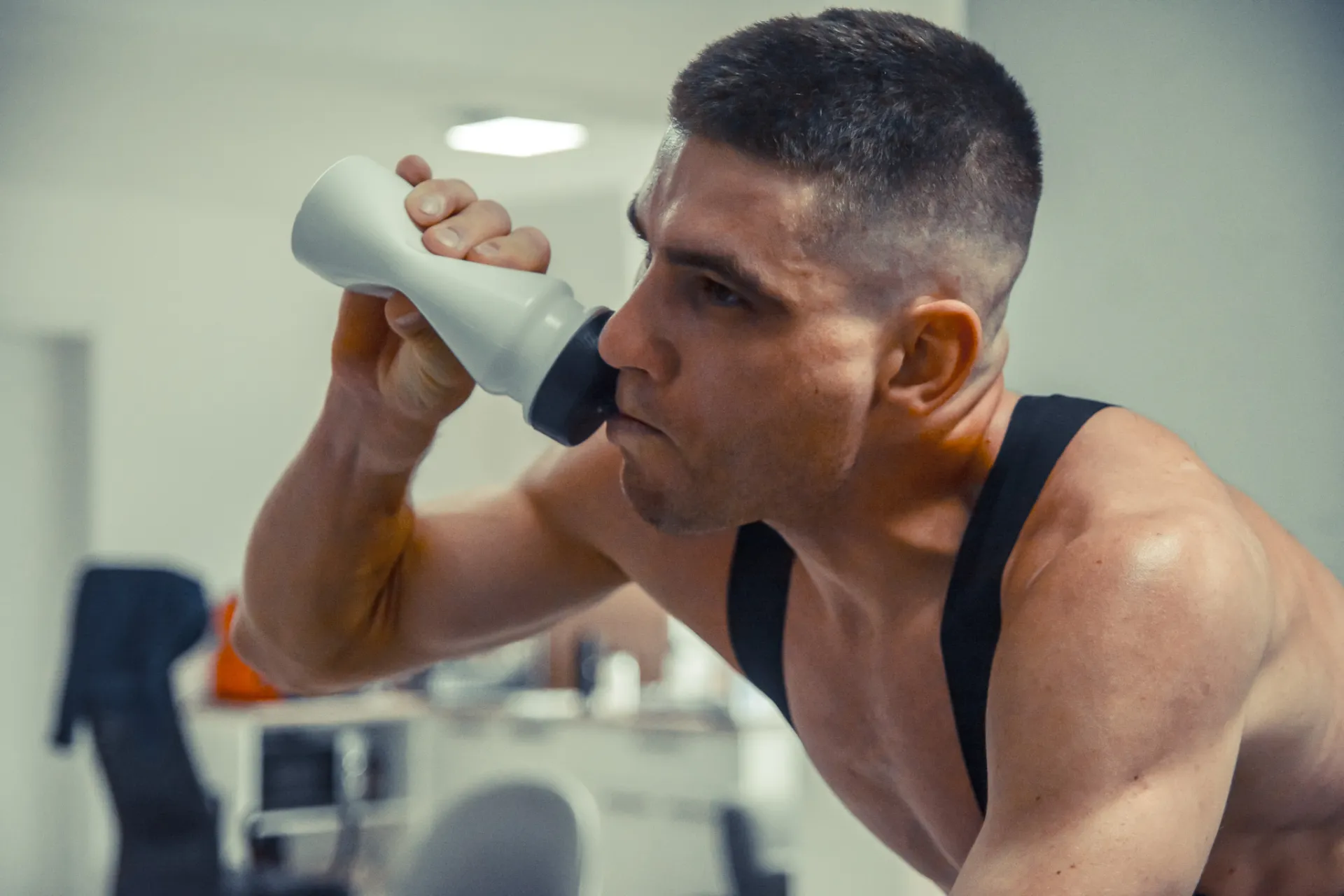
Athlete drinking carbohydrate solution during test

Generic Approach

"Take 60–90 g/hour"

  • GI distress on race day
  • Bonking despite high intake
  • Excessive intake causes GI distress
  • Guessing instead of knowing

Personalised Approach

"Your recommended intake: 140 g/hour (glucose + fructose in 1:0.8 ratio)"

  • Zero GI issues
  • Optimal intake for maximum performance
  • Product and strategy recommendations
  • Decisions based on measurements
The Science

How Does Isotopic Tracing Work?

We use carbohydrates labelled with the stable carbon isotope (¹³C). Simultaneously, we measure total substrate oxidation with a metabolic analyser. When ingested carbohydrates are oxidised, ¹³C appears in exhaled CO₂. Using mass spectrometry, we determine the ¹³C/¹²C ratio, enabling us to distinguish between exogenous (ingested carbohydrates) and endogenous (glycogen stores) oxidation. ¹³C is a stable (non-radioactive) isotope naturally present in food — its consumption is completely safe.

1

Ingestion of ¹³C-labelled glucose

During the test, you drink a solution containing a precisely known proportion of ¹³C-labelled glucose at regular intervals.

2

Measurement of total oxidation with metabolic analyser

Using a metabolic analyser (Cortex), we continuously measure total substrate oxidation (fats and carbohydrates) via gas exchange (VO₂, VCO₂).

3

Analysis of ¹³C/¹²C ratio in exhaled CO₂

Exhaled air samples are analysed with a mass spectrometer that precisely determines the ¹³C/¹²C ratio. Since the ingested glucose is labelled with ¹³C, we can accurately assess what proportion of oxidation comes from ingested carbohydrates and what proportion from glycogen stores.

4

Calculation of your individual oxidation rate

By combining both measurements — total substrate oxidation and isotopic analysis — we determine your exogenous glucose oxidation rate (g/min) and create a personalised carbohydrate intake strategy, including the optimal glucose-to-fructose ratio.

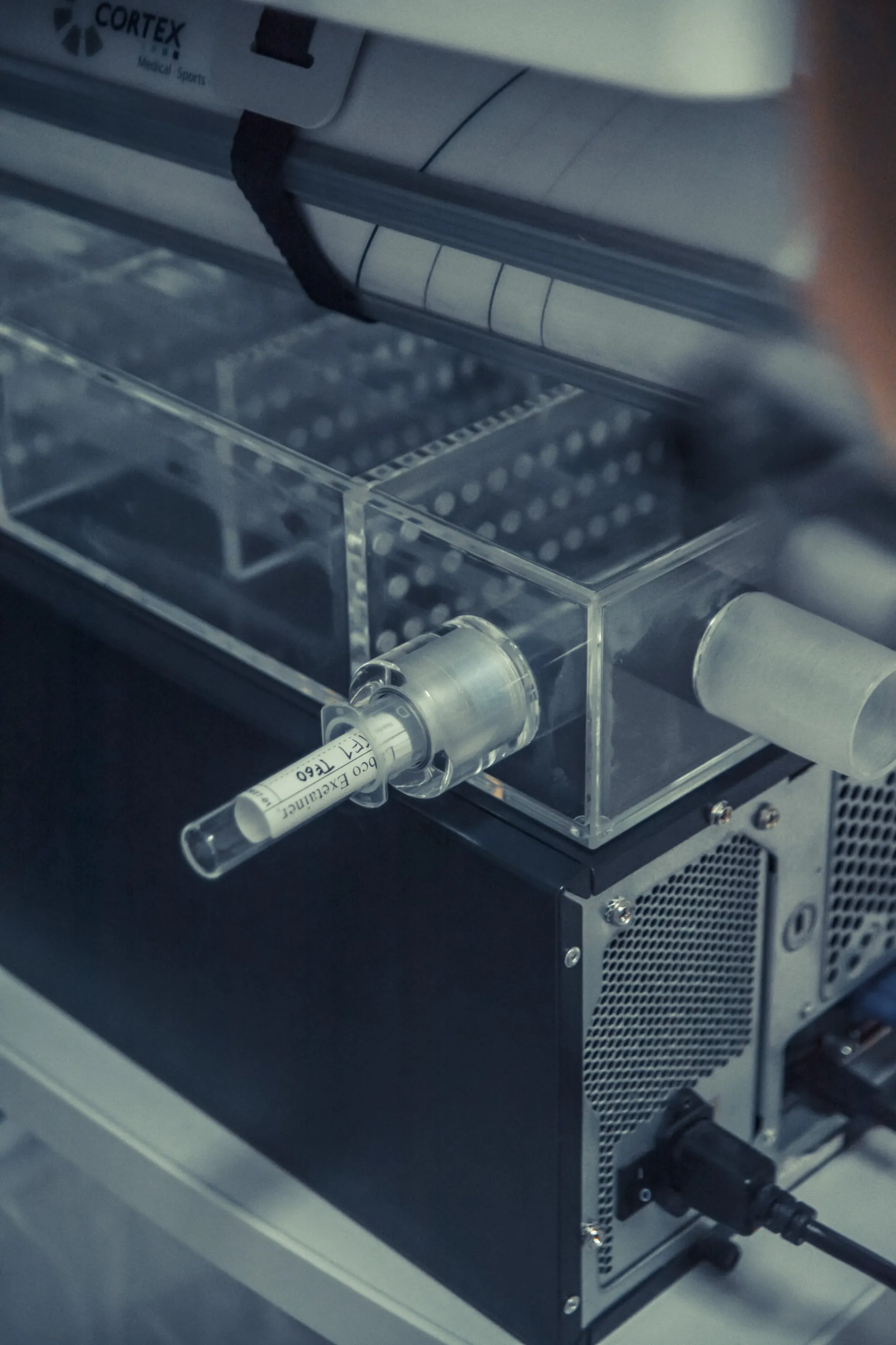
Mixing chamber for collecting exhaled air enriched with ¹³C

Mixing chamber for collecting exhaled air enriched with ¹³C

Protocol

What Happens on Test Day?

The test consists of two parts — approximately 3.5 hours in total. In addition to your personalised carbohydrate utilisation data, you also get a complete picture of your endurance performance.

Part 1

Incremental Step Test

Progressive increase in intensity to exhaustion. We determine VT1 (first ventilatory threshold), VT2 (second ventilatory threshold) and VO₂max. These data points are essential for correctly setting the intensity in the second part of the test.

Rest

30 Minutes Recovery

Time for recovery, preparation of the isotopically labelled drink, and equipment setup for part two.

Part 2 — 2 Hours 35 Minutes

Steady-State CHO Test

5-minute warm-up followed by 2 hours 30 minutes at a constant intensity of 90–95% VT1. Throughout the test, you drink ¹³C-labelled carbohydrate solution at regular intervals. Exhaled VO₂ and CO₂ are measured at 30 and 15 minute intervals.

After the Test

Sample Analysis

Exhaled air samples are sent for laboratory analysis. Results are ready in approximately 14 days.

Athlete on trainer with power and time display Preparation of carbohydrate solution for the test
What You Get

A Complete Results and Consultation Package

This test doesn't just give you a single number — you receive a full set of data to optimise both your training and race-day nutrition.

Performance Report

From the incremental step test, you receive VO₂max values, VT1/VT2 thresholds, maximum heart rate, and individualised training zones.

  • VO₂max (absolute and relative)
  • VT1 (first ventilatory threshold) and VT2 (second ventilatory threshold)
  • Training zones (power and heart rate)

Personal Consultation

Expert review of your results with our dietitian and physiologist. Together, you'll build a race-day nutrition strategy.

  • Explanation of all results
  • Race and training strategy
  • Gut training recommendations
Physiologist monitoring athlete during metabolic test

Exhaled air analysis results are ready in approximately 14 days after the test (isotope laboratory analysis time).

Introductory Offer — First 10 Tests

Personalisation of Carbohydrate Intake

Complete test package: incremental step test + 2.5-hour steady-state CHO test with isotopic tracers + report + consultation.

849 € 699 €
  • Incremental step test (VT1, VT2, VO₂max)
  • 2.5-hour CHO oxidation test with ¹³C isotopic tracers
  • Detailed performance report
  • Carbohydrate oxidation report with personalised strategy
  • Consultation with dietitian and physiologist
Book Your Test

After introductory period: 849 €/test

FAQ

Everything You Need to Know

Who is this test for?

We currently offer the test for cyclists, runners, and triathletes who want to optimise their nutrition strategy for competition. It's especially valuable for athletes who experience GI distress during exercise or want a data-driven approach to race-day nutrition planning.

How should I prepare for the test?

We'll send you detailed instructions before the test. In general: arrive well-rested (no intensive training 24–48 hours beforehand) and fasted. Avoid foods enriched with ¹³C (e.g. corn syrup) for at least 3 days before the test.

What do I need to bring?

Bring your bike and gear, as if you were heading out for a training ride. The test is performed on your own bike.

How is this different from a standard metabolic test?

A standard metabolic test (e.g. lactate profile or VO₂max) measures total fat and carbohydrate utilisation, but cannot distinguish between exogenous (ingested) and endogenous (glycogen stores) sources. The isotopic CHO test uses ¹³C-labelled glucose to precisely separate these two components and measure how much of your ingested carbohydrates your body actually uses — which is impossible to determine without isotopic tracers.

When will I receive my results?

Incremental step test results (VO₂max, thresholds, training zones) are available within a few days. Carbohydrate oxidation analysis results are ready in approximately 14 days, as laboratory analysis of exhaled air samples is required to determine isotope ratios. Once results are prepared, we'll invite you for a personal consultation.

Can I combine this with other HPC services?

Yes! The test already includes an incremental step test, so you also receive a complete set of data about your aerobic performance. If you'd like additional coaching or nutrition guidance, we can arrange a package deal.

Ready for a personalised approach?

Stop guessing and start measuring.

Contact Us